
Dealing with a back tooth that's been missing long enough that chewing on that side feels wrong? Dentist Open Now finds a Marcus, IA specialist who handles this specific case regularly and has room to see you.
Call and a coordinator checks live openings with a specialist while you're on the line.
+1-866-227-2801
A missing tooth doesn't just leave a gap — the jawbone underneath starts losing density within months, and neighboring teeth begin drifting toward the open space. Because an implant fuses into the bone through osseointegration, it does something a bridge can't: it gives the jaw something to hold onto again.
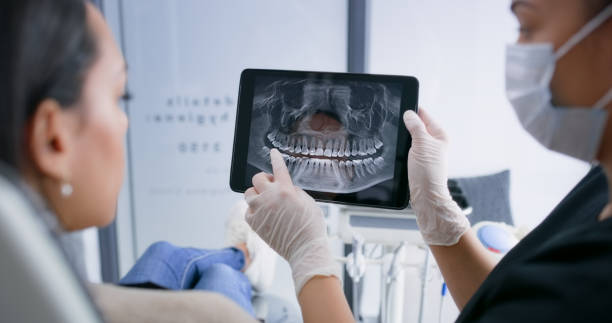
Before anyone reaches for a drill, the offices we refer to run a CBCT scan to map bone density and nerve position in three dimensions. If bone volume is too thin, that's flagged during the same visit — not discovered partway through surgery.
That waiting period isn't red tape — it's what keeps the restoration from failing under normal biting force later. Most patients aren't left with a visible gap during that stretch, since a temporary tooth usually covers it.
Placement is handled by providers with focused surgical training in implant dentistry specifically.
The plan is based on your actual bone anatomy, captured digitally, not estimated by eye.
Nothing gets bundled into a vague lump sum — each stage is priced and explained ahead of time.
If bone needs rebuilding first, that's done at the same practice instead of a separate referral chain.
Whatever the specifics of your case, the specialist we route you to has handled it before.
Replaces a single missing tooth root and crown together, built to blend rather than stand out.
A row of missing teeth can be restored on as few as two implant posts.
A full arch of teeth restored on four strategically placed implants, often without a full bone graft.
Loose dentures get snapped onto two to four implants for a fit that doesn't shift when you eat.

Prepares thin bone so it can properly hold an implant post long-term.
Some patients walk out with a placeholder tooth in place immediately, swapped later for the final restoration.
A coordinator answers and asks a few quick questions about your specific case and how urgent it is.
We match you with a nearby specialist experienced in this exact procedure and check real-time openings.
The specialist examines your case, often with same-visit imaging, and gives you a cost estimate before starting anything.
Treatment proceeds on the agreed plan, with aftercare instructions and a follow-up if the case calls for one.
"Called and they were upfront that my usual office was booked, then found me somewhere open the same week."
"Didn't have to wait weeks like my old dentist. Got routed straight to a specialist who knew what to do."
"Was honest that the closest office was full and got me into a nearby one instead of leaving me stuck."
Most cases run three to six months total, mostly waiting on the bone to fuse before the crown is attached.
The procedure itself isn't painful thanks to anesthesia; mild soreness afterward responds to standard pain relief.
Grafting or a sinus lift can often build up enough volume, which gets evaluated during your imaging appointment.
Pricing varies with the number of implants and any bone work required, confirmed before you commit to anything.
A bridge depends on neighboring teeth for support, while an implant stands on its own.
With regular checkups and good hygiene, implants commonly last twenty years or more.
We keep a live list of specialists across Marcus and the surrounding zip codes, so a nearby, open provider is already in our network.
Licensed to practice in IA, verified before referral.
Call now and a coordinator matches you with an open specialist and a confirmed time.
Call +1-866-227-2801 Now